Tone of Voice in Social Media: How to Define and Apply It
Your team has been told to sound friendly. Then a duplicate-charge complaint lands in an X reply, an outage fills Instagram DMs, and someone posts a sarcastic thank-you under your latest update. The same cheerful template won't work for all of them.
For social care teams, tone of voice in social media is a working decision, not just a writing preference. Before anyone drafts a reply, they need to know what the customer wants, what could go wrong, and who owns the next step.
Table of Contents
- What Tone of Voice Means on Social Media
- How to Build a Brand Voice Framework
- Which Tone Fits Each Social Situation
- Tone Examples Across Social Channels
- Drafting AI Replies That Stay On-Brand and Compliant
- Measuring Whether Your Tone Works
- Start With One Voice Policy Per Risk Level
What Tone of Voice Means on Social Media
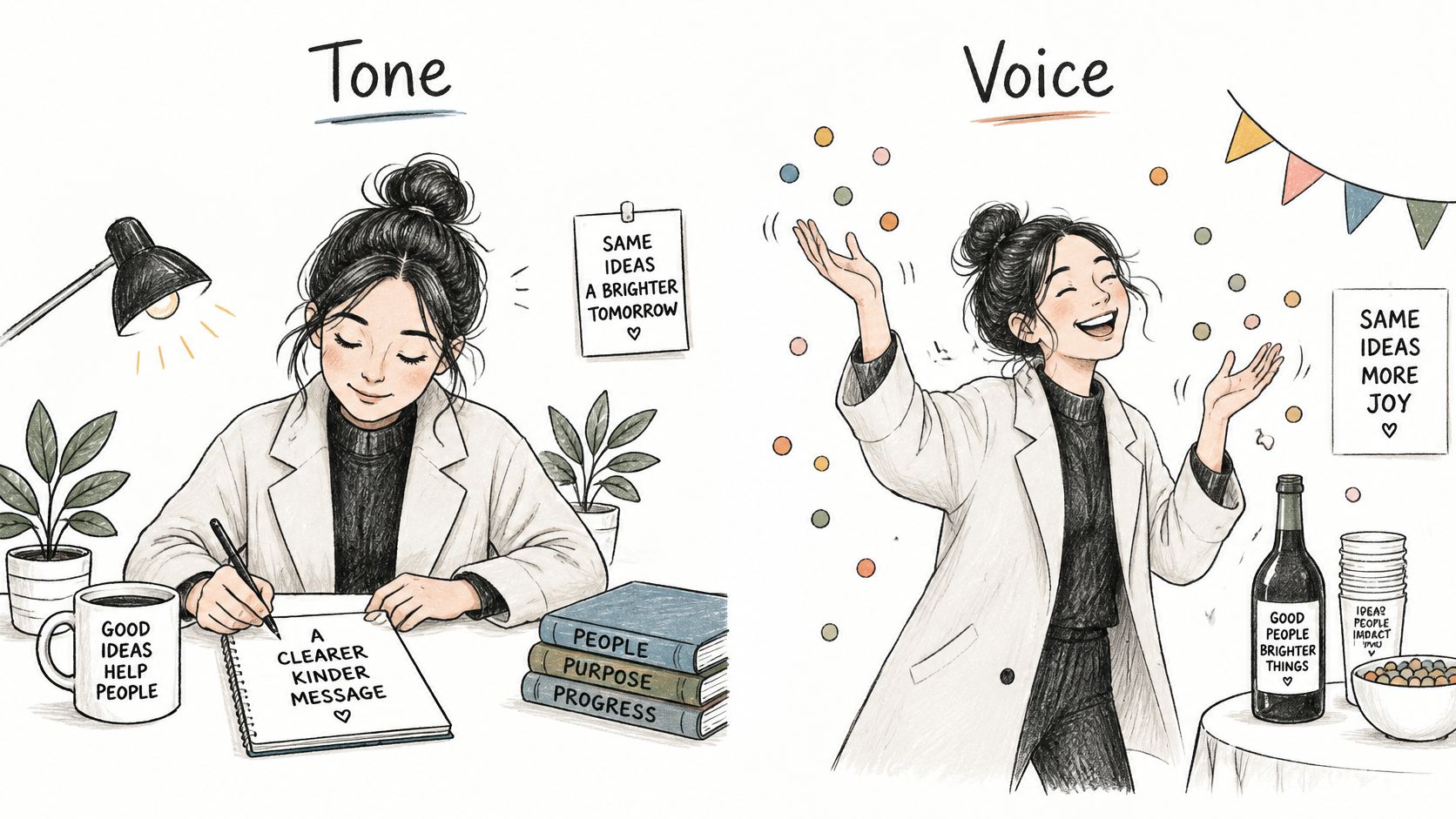
Tone of voice is how a brand sounds in a specific moment. Brand voice is the stable personality behind it. A person can keep the same character while speaking differently at a funeral than at a party. Your brand should make that adjustment too.
A warm, plainspoken brand doesn't have to become cold during an outage. It should drop the jokes, acknowledge the disruption, and explain what's known.
Brand voice compared with tone of voice
| Element | Brand voice | Tone of voice |
|---|---|---|
| What it is | The consistent personality the brand always shows | How that personality shows up in one message |
| Does it change? | Rarely; set in brand guidelines | Shifts with situation, channel, audience and risk |
| Example | Plainspoken, expert, warm | Apologetic during an outage, lighter in a fan reply |
| Who owns it | Brand and comms leadership | Care, community and social teams applying the guidelines |
The distinction is easier to remember visually.
Tone also isn't the same as sentiment, which describes whether language appears positive, neutral or negative. A 2017 study of brand conversations analyzed 76,166 tweets mentioning five major UK online retailers, classifying 80% as neutral, 12% as positive and 8% as negative. The sample covered one month and five retailers, so treat those percentages as a historical baseline, not a universal rate.
Neutral messages may contain factual questions, routine service requests or product references. A customer asking whether a payment went through may sound neutral but still need urgent help.
Define tone in working terms
Separate emotional polarity from intent, urgency, sarcasm and service context. A positive-looking thank-you might describe an unresolved failure, while an angry message might contain a straightforward request for a receipt.
Reply test: Does the customer recognize the brand personality and know what happens next?
How to Build a Brand Voice Framework
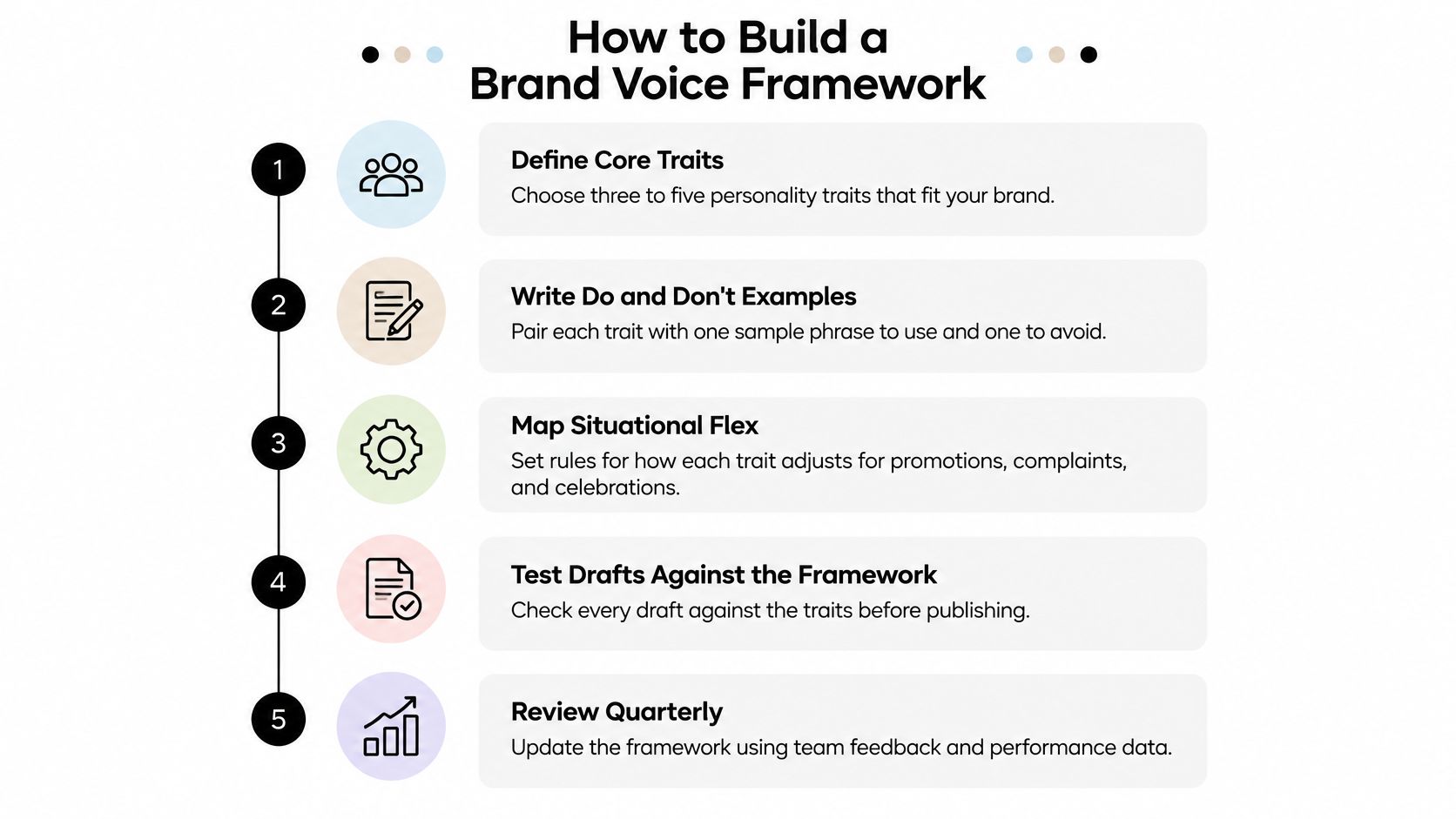
A working framework needs three to five traits, examples of what to write and avoid, and rules for how each trait changes by situation. Treat that range as a practical starting point, not a scientific threshold.
Use this visual as a compact reminder of the framework.
Turn traits into reviewer decisions
Audit the inbox. Start with a working sample of 30 to 50 recent replies across channels. Tag replies customers praised or escalated, then check whether the wording helped or whether the underlying service decision caused the reaction.
Choose recognizable traits. Define each in a sentence: warm acknowledges the customer's circumstances; direct answers without padding; accountable names the next action and owner. For aligning care language with the wider brand, the website voice advice from Blu Dragonfly offers a useful companion resource.
Write contrasting examples. Use anonymized inbox situations rather than abstract adjectives. Give reviewers wording they can accept, edit or reject.
Set boundaries. Specify banned words, emoji rules, humor limits and topics that never get jokes. Include money, safety and legal disputes in the no-joke category.
Map traits to intent and risk. Let warmth lead for engagement, accountability for complaints, and precision for incidents. Maintain separate tone policies by risk level rather than one global instruction to sound human.
Assign ownership. Name a brand owner and care, community and comms approvers. Reviewers need an identifiable decision-maker when guidelines conflict.
Test before rollout. As a practical pilot, check 100 drafted replies against the traits, boundaries and routing rules. Record disagreements so you can fix unclear instructions before they generate reviewer fatigue.
For a billing complaint in an X reply, the approved example could read:
I can see the duplicate charge on your order, finance is reviewing it, and we will confirm the outcome here.
Use that wording only when the charge and finance review are verified, and keep account details private. The rejected alternative, No worries, we will sort that out lol!, jokes about money without providing a checkable next step.
Why situational rules matter
A 2022 experiment published in the International Journal of Communication found higher perceived social presence for a casual, humanized voice than a corporate voice, with mean scores of 3.92 versus 2.92, F(1,124) = 15.97, p < .001, and linked that presence to greater engagement intention. That supports conversational wording, not unrestricted informality.
When money, safety or legal exposure is involved, remove excessive familiarity. Being approachable doesn't require joking.
For a discussion alongside your team's written examples, use this video.
Which Tone Fits Each Social Situation
Tone should change with the situation, not remain identical everywhere. Use the customer's request and the consequences of a wrong answer to select the reply style.
Tone to use by social situation
| Situation | Tone to use | Avoid | Human sign-off |
|---|---|---|---|
| Product praise or fan post | Warm, conversational, brief | Over-scripted thanks | Not needed unless the post names a problem |
| Billing complaint in a reply | Direct, accountable, specific next step | Jokes, casual reassurance | Yes, before any refund or charge promise |
| Outage surge | Calm, factual, status first | Humor, speculation about cause | Yes, using a pre-approved holding statement |
| Feature request in a DM | Appreciative, neutral on timing | Promised delivery dates | Route to product; no commitment |
| PR risk in mentions | Precise, minimal, no speculation | Casual tone, emoji | Yes, comms lead approves |
| Spam or scam wave | Brief, no engagement, warn users | Replying to links or offers | Trust and safety team decides |
| Multilingual slang | Match register in the same language | Literal translation of idioms | Native-speaker reviewer for high-risk threads |
For a scam wave, no engagement means don't converse with the scammer. Publish an approved warning for users and route suspicious accounts to trust and safety instead.
A feature-request reply needs a different boundary. You can acknowledge the use case and send it to product without suggesting that an item is on the roadmap.
Read the relationship as well as the message
A 2024 Journal of Consumer Research study examined 39 brands and 77 brand crises on Facebook: consumers without prior interaction used more familiar and self-referencing language after values-related crises and expressed more anger after performance-related crises, while previously interacting consumers showed greater anger after values-related crises. Two negative posts can therefore require different replies.
A familiar customer seeking a repair needs ownership and practical help. Someone challenging the brand's conduct may need a precise explanation approved by comms, not a troubleshooting script.
Human-sounding language has limits too. Across four online studies published in the Journal of Interactive Marketing, humanized voice increased purchase intention for entertainment-oriented brands, but that benefit disappeared when several negative comments were visible; in high-involvement situations, it could increase perceived risk.
Check before choosing the wording
- Intent: Is the person asking for help, sharing praise, requesting a feature or challenging the brand?
- Severity: Could an incorrect reply affect money, safety, privacy or reputation?
- Thread context: Are other people already describing the same failure?
For low-risk conversations, Bazzly's examples of non-salesy replies to founder launch announcements illustrate how to participate without turning every response into a pitch.
Let the situation row set the tone within your brand voice. Be especially careful with a message that looks like a joke but involves money or safety.
Tone Examples Across Social Channels
Say a billing complaint arrives as an X reply at 9 pm. The next morning, the same customer posts in your forum because they haven't heard back. Link the cases, but keep channel-specific queues and ownership so neither team assumes the other has resolved it.
Channel expectations aren't interchangeable. A cross-channel customer-service study summarized by ICMI found that 64% of Twitter users expected a response within one hour, while 85% of Facebook users expected an answer within six hours.
Channel norms and tone adjustments
| Channel | Expected reply speed | Tone and format adjustment | Public or private first |
|---|---|---|---|
| X | 64% expect a reply within one hour | Short, fast, accountable | Public acknowledgement, then DM |
| 85% expect an answer within six hours | Fuller sentences, empathy, help link | Public reply, then private follow-up | |
| Unknown from this study | Warm, brief comment replies | Public comment, then DM for account issues | |
| TikTok | Unknown from this study | Creator-native, casual, no corporate phrasing | Public comment; private for personal data |
| Discord | Unknown from this study | Role-aware, points to pinned FAQ | Channel reply for general questions, ticket for accounts |
| Telegram | Unknown from this study | Concise, group-aware, no repeated posts | Group reply, then private message |
| Unknown from this study | Personal, structured, one-to-one | Private by default | |
| Forums | Unknown from this study | Thread-aware, detailed, cites prior answers | Public thread reply |
These are response-design recommendations, not permission to soften a serious issue. Unknown speed figures mean you should set an SLA using your service commitments and queue evidence, not invent a platform benchmark.
Keep the facts consistent while changing the format
On X, acknowledge the billing issue briefly and direct the customer to a secure private route. On Facebook, you can add a fuller explanation, but don't bury the action beneath a long apology.
For Instagram, respond to the actual comment and move account verification to DMs. On TikTok, avoid stiff corporate phrasing, but don't imitate a creator's joke when the customer is reporting a charge.
Discord replies should respect support roles and pinned guidance. Telegram groups need a concise general response without repeated announcements, while WhatsApp is better suited to a structured private exchange.
In the forum scenario, read the existing thread before answering. A useful reply can explain what the care team has already done without exposing billing details or making the customer repeat their story.
Match the channel's public or private norm first. Then adjust tone to the customer's intent.
Drafting AI Replies That Stay On-Brand and Compliant
AI-drafted replies need a disclosure protocol, not just a style guide. Decide whether AI is assisting a person, delivering a bounded automated answer or holding a case for human escalation.
AI reply modes and their disclosure rules
| Mode | When it applies | Disclosure approach | Prohibited claims | Handoff rule |
|---|---|---|---|---|
| AI-assisted human response | Routine questions a person reviews before sending | Follow the brand policy on disclosure; identify AI assistance when applicable | Promised outcomes not confirmed by staff | Reviewer edits or rejects any low-confidence draft |
| Clearly automated transactional response | Order status, password reset, appointment details | State the reply is automated and name the human route | Empathy claims that imply a person wrote it | Hand off on any repeat, complaint or failed lookup |
| Human escalation for sensitive issues | Money, safety, legal exposure, outages, PR threats | AI holds with a pre-approved holding statement | Any statement about cause, fault or compensation | Person writes the substantive reply; owner named per queue |
These are operational guardrails, not a complete statement of legal obligations. Have the relevant legal or compliance owner approve disclosure wording and any regulated service requirements.
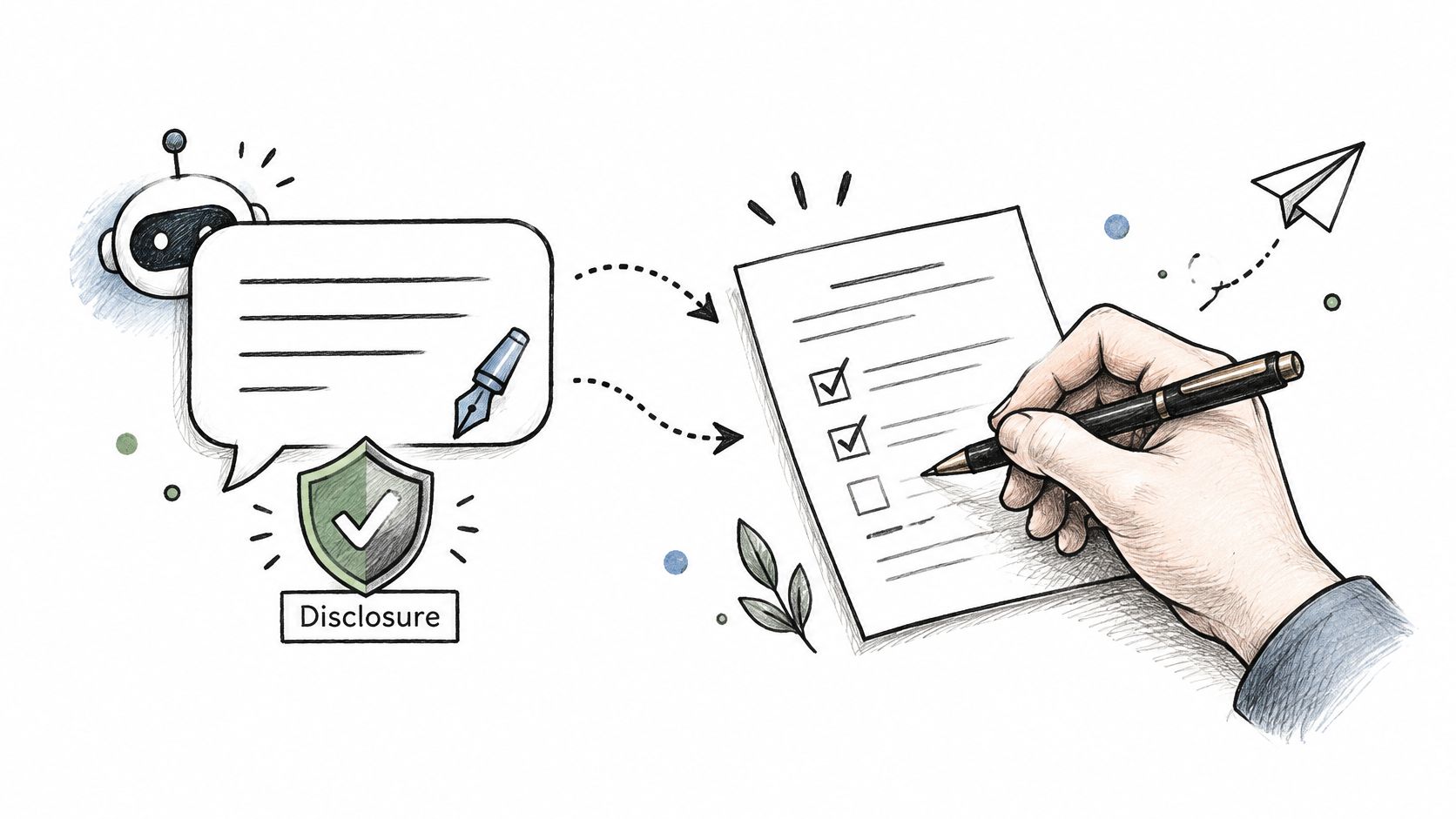
The disclosure checklist should sit beside the tone checklist.
Prefer bounded competence to simulated intimacy
An EMARKETER summary of consumer concerns reports that 52% of consumers in the US, UK and Australia ranked undisclosed AI-generated brand content among their top social-media concerns; it also cites a 2025 survey in which 83% wanted disclosure when AI was used and 60% worried about inaccurate AI responses.
Maximum human-likeness isn't a sensible default. An automated response can be clear and respectful without implying that a person has investigated the case or personally understands the customer's feelings.
For example, an automated transactional message might say: This is an automated status reply. I couldn't retrieve your order details, so I'm passing this to our support team. That wording identifies the limit and the next owner.
For AI-assisted human replies, a disclosure option is: I used AI to help prepare this response and checked the details before sending. Use it only when the reviewer performed that check.
Make escalation executable
The GOV.UK social-media playbook describes pre-approved responses for recurring questions, a separate escalation process for urgent queries or reputational threats, and a traffic-light severity system. Its crisis planning also assigns responsibilities for the information cascade, response leadership, holding statements and account protection.
Apply that structure to your unified inbox:
- Routine: Draft from approved information and flag missing facts.
- Sensitive: Route billing to finance, bugs to engineering and PR risk to comms before making commitments.
- Critical: Use an approved holding statement, notify the incident owner and require human approval for the substantive response.
Keep the source information, draft, reviewer edits and final decision together. If an agent can't establish a fact from an approved source, the reply should state the limit or move to a person, not compensate with confident wording.
AI should filter noise, classify and draft. People approve, decide and own the hard calls.
Measuring Whether Your Tone Works
Judge tone by service outcomes, not likes or perceived friendliness. The Emplifi Social Pulse Consumer Brand Survey 2025 reports that roughly one-third of consumers expect replies to tags and DMs within one hour, only 8% are willing to wait 48 hours, and 51% of people contacting a brand publicly expect public acknowledgement before a private message.
Measure that public acknowledgement separately from the private resolution. A quick apology doesn't prove the customer received help.
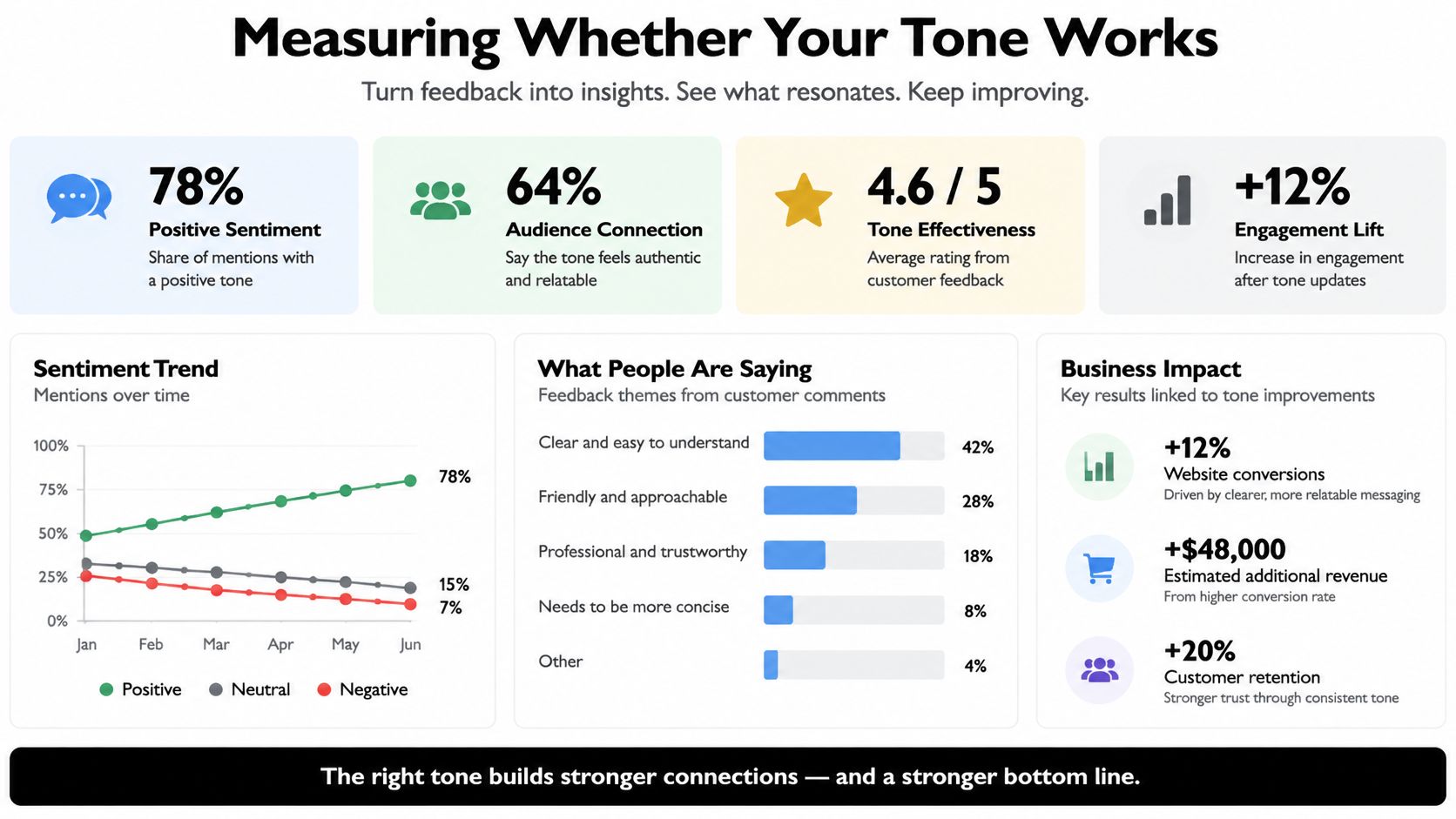
Use this visual as a starting point for the reporting conversation.
Track what happens after the reply
- Acknowledgement-to-resolution time: Measure elapsed time per channel queue, including waits for finance or engineering.
- Escalation accuracy: Track the share of routed cases the receiving team accepts without rerouting.
- Repeat-contact rate: Use a defined window, such as seven days, to identify customers returning with the same unresolved issue.
- Sentiment change: Compare the first and last customer message, with human checks for sarcasm and ambiguous language.
- Customer effort: Count exchanges needed to reach resolution, including repeated requests for information.
- Auto-closure rate with satisfaction: Check whether closed conversations stayed resolved and whether customers accepted the outcome.
Engagement still matters for community conversations. For that separate purpose, guidance on how to measure meaningful interactions with SleekPost can help distinguish substantive participation from surface activity.
Test comparable replies
Choose contrasting tone versions for the same intent and risk level. Run the test over a fixed window covering a full weekly cycle, keeping staffing, routing and available remedies comparable.
Compare repeat contacts and escalation accuracy before celebrating engagement. Review examples as well as averages so you can see whether a warmer opening helps or merely adds words before the answer.
Warning sign: Rising auto-closure alongside rising repeat contacts can mean you're closing tickets without solving the problem.
Measure results by language. A slang misread may affect one market while disappearing inside an overall average, so sample local conversations and ask a fluent reviewer to check the interpretation.
Start With One Voice Policy Per Risk Level
Adopt a tone policy per risk level before rewriting every template. Start with the rows where a wrong word costs the most: billing replies need verified facts and finance ownership, while outage replies need approved status language and an incident owner. A reply that sounds warm while promising a refund nobody approved creates a second ticket and a harder conversation.
Adjacent teams need different entry points. Community managers should begin with engagement and channel norms for Discord, forums and Facebook, where a loose register is part of how the space works. Social ops and insights leaders should set baselines for repeat contacts and escalation accuracy before changing a single word, so the rollout has something concrete to be judged against.
Make the first rollout narrow
- Write the complaint policy: Specify the acknowledgement, the verification route, the promises agents may not make, and the human owner.
- Write the incident policy: Name who approves status language, who updates holding statements, and who can authorize closure.
- Pilot inside one queue: Run the revised replies in a single queue for 30 days, reviewing unresolved cases alongside closed ones.
Keep those policies attached to the queue, not buried in a brand document. A reviewer should see the rule that applies while reading the customer's message, the same way a saved macro sits next to the conversation it answers.
A unified inbox across X, Instagram, WhatsApp, Telegram, Discord, Facebook and forums can hold this workflow together through auto-tagging, routing to finance, engineering or comms, and drafts written in a configured brand voice. High-consequence replies still get a person's approval before they send, and a system-drafted reply should identify itself where your policies require it.
Before enabling automation, answer the ownership question: which replies must a human own, and which can the system close safely?
Sift AI brings social and community queues into one inbox, filters noise, tags intent, routes issues and drafts replies in your configured brand voice. Visit Sift AI to explore how your team can apply risk-based tone policies while keeping people responsible for high-consequence responses.